

You have finally found a new office space that fits your growing team perfectly. The lease is signed, the movers are booked, and you are ready to go. But then, you take a closer look at your current tenancy agreement and see a clause that stops you in your tracks: Office Reinstatement. If you are like most business owners or office managers I’ve met over the last 15 years, this is the part of the move that causes the most stress. You might be wondering, “Why do I have to fix up the place if I’m leaving?”
In Singapore, office reinstatement is not just a polite gesture; it is a strict legal and financial obligation. Failing to plan for it can result in heavy penalties, delayed deposit refunds, or even legal disputes with your landlord. This guide is here to clear up the confusion. We will break down exactly what office reinstatement means, the step-by-step process, the real 2025 costs, and how to avoid the common traps that catch tenants off guard. Whether you are an SME owner or a corporate tenant, this guide will help you hand over your unit smoothly and get your security deposit back.
Understanding Office Reinstatement in Singapore
Let’s keep this simple. Office reinstatement is the process of returning your office unit to its original “bare shell” condition—exactly how it looked before you moved in and started your renovations. In the industry, we often call these “make good works.” When you took over the space, it likely had empty floors, standard white walls, and a basic ceiling grid. Over time, you probably added glass partitions, meeting rooms, fancy lighting, and maybe a pantry. Now that your lease is ending, your landlord requires you to undo all those changes. This is mandatory under almost all commercial leases in Singapore.
Common “Make Good” tasks include:
- Knocking down the partition walls you built.
- Removing the carpet or vinyl flooring you installed.
- Restoring the air conditioning ducting to its original layout.
The goal isn’t to make the office look “new”; the goal is to make it look neutral so the landlord can lease it to the next tenant immediately.
Pro Tip: Always look for the “handover obligations” clause in your lease. It will specify if you need to return the unit to a “bare condition” or a “fitted condition” (though fitted is very rare).
What Exactly Is Included in Office Reinstatement?
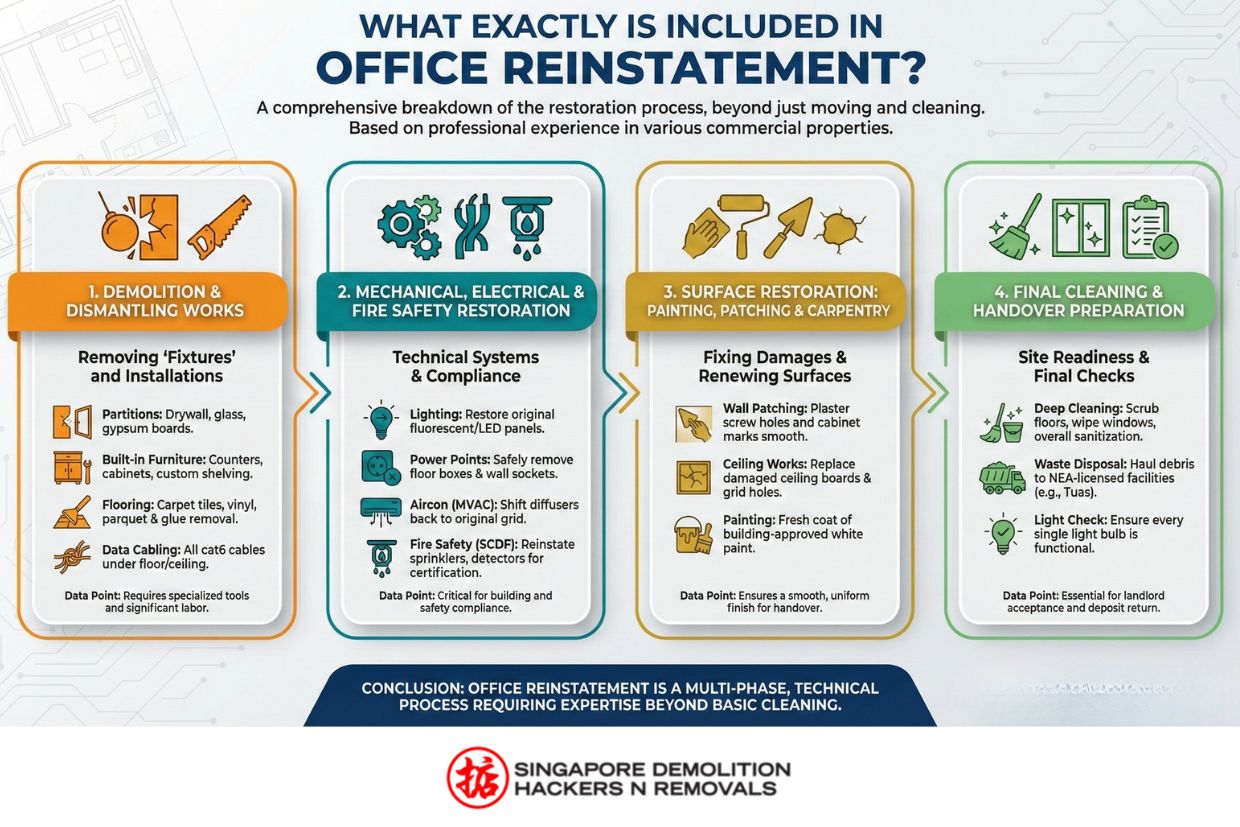
Many tenants assume reinstatement just means moving their furniture out and sweeping the floor. Unfortunately, it is much more involved than that. Based on my experience handling handovers in buildings ranging from Suntec City to industrial hubs in Ubi, here is what the work actually entails.
Demolition & Dismantling Works
This is the messy part. We have to remove everything that constitutes a “fixture.” This includes:
- Partitions: Drywall, glass, or gypsum board partitions used to create manager rooms or meeting areas.
- Built-in Furniture: Reception counters, pantry cabinets, and custom shelving units that are attached to the walls or floor.
- Flooring: If you glued down carpet tiles, vinyl, or parquet, it all has to come up. We also have to scrape the floor to remove the stubborn glue residue.
- Data Cabling: This is often overlooked. All the cat6 cables running under your raised floor or through the ceiling usually need to be pulled out.
Mechanical, Electrical & Fire Safety Restoration
This is the most technical part of the job. You cannot just cut the wires and leave.
- Lighting: If you installed fancy pendant lights, they must be removed, and the original fluorescent or LED panel lights must be put back.
- Power Points: Any floor boxes or additional wall sockets you added must be terminated and removed safely.
- Aircon (MVAC): If you moved aircon diffusers (vents) to suit your meeting room layout, they must be shifted back to the building’s original grid.
- Fire Safety (SCDF): If you moved sprinklers or smoke detectors, they must be reinstated to comply with the building’s original Fire Safety Certificate.
Surface Restoration: Painting, Patching & Carpentry
Once the demolition is done, the office will look rough. We need to fix that.
- Wall Patching: Removing screws and cabinets leaves holes. These need to be plastered smooth.
- Ceiling Works: If we removed a partition, there will be screw holes in the ceiling grid. We often have to replace damaged ceiling boards.
- Painting: Finally, the entire unit (walls and sometimes columns) needs a fresh coat of white paint. Note that this must be the specific shade of white approved by the building management.
Final Cleaning & Handover Preparation
You can’t hand over a dusty site. The final step involves:
- Deep Cleaning: Scrubbing the floors and wiping down windows.
- Waste Disposal: You cannot use the building’s general bins. All debris must be hauled to NEA-licensed facilities like the Tuas Marine Transfer Station.
- Warning: Illegal dumping (fly-tipping) carries a fine of up to $50,000. If your contractor dumps your office debris illegally and gets caught, as the tenant, you could be liable.
- Light Check: Ensuring every single light bulb works (landlords will check this!).
Why Office Reinstatement Is Required (Legal & Practical Reasons)
You might feel frustrated that you have to pay to demolish perfectly good renovations. However, there are three main reasons why this is standard practice.
Compliance With Tenancy Agreement Terms
Your lease likely contains a clause stating the premises must be yielded up in its “original condition, fair wear and tear excepted.” However, “fair wear and tear” does not cover renovations. If you built a wall, you have to un-build it. This is a contractual obligation you signed up for.
Landlord’s Need to Prepare for New Tenants
Imagine if you were a new tenant looking for space. Would you want to inherit someone else’s weird purple meeting room or a reception desk that doesn’t fit your brand? Probably not.
Landlords need a “blank canvas” because it allows them to market the property to anyone. A standardized, empty unit ensures a fast turnaround between tenants.
Safety & BCA/SCDF Compliance
This is the serious part. Over years of renovation, safety standards might have been compromised.
- Sprinklers might be blocked by partitions.
- Emergency lights might have been disconnected.
- Electrical loads might be unbalanced.
Reinstatement forces a “reset” of the Mechanical and Electrical (M&E) systems, ensuring the unit meets current BCA (Building and Construction Authority) and SCDF fire safety regulations before the next person moves in.
The Office Reinstatement Process (Step-by-Step Breakdown)
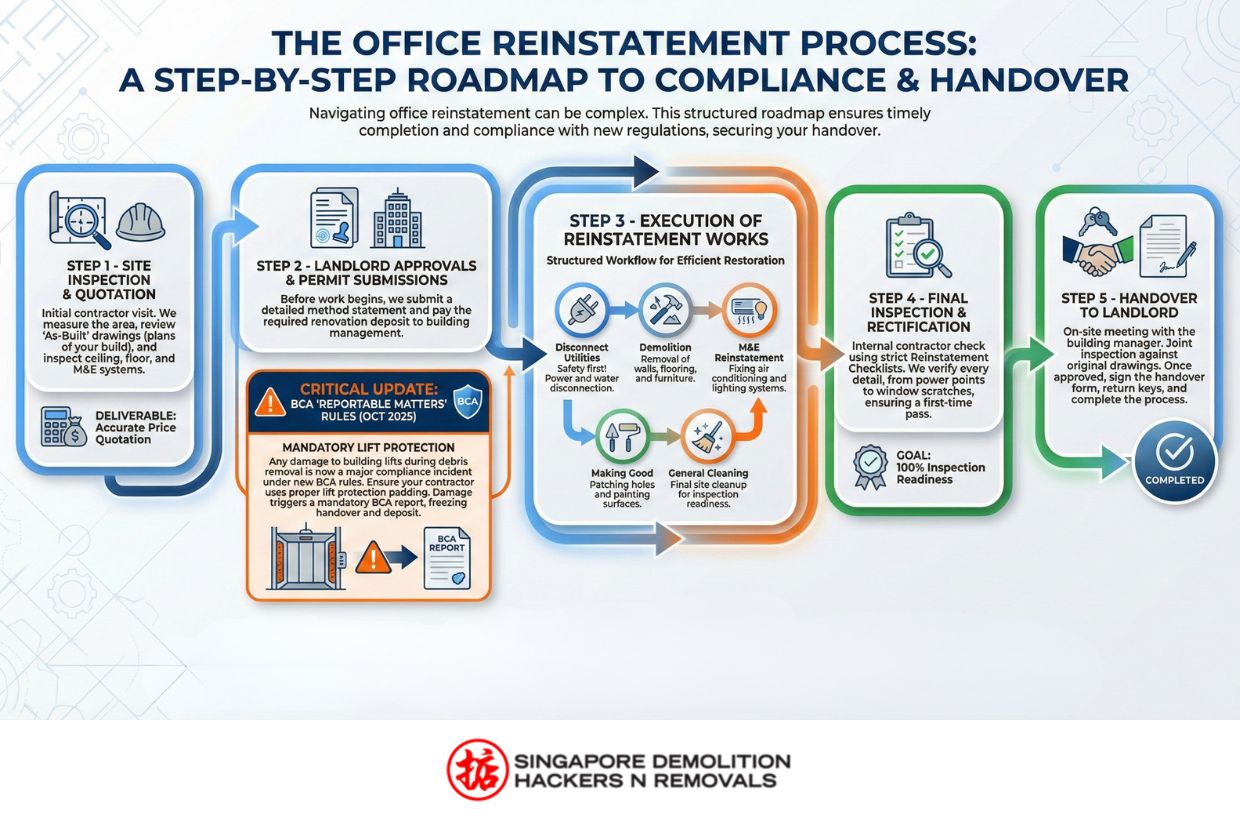
If you have never done this before, the process can feel chaotic. Here is the roadmap we follow to ensure everything gets done on time and within the new regulations.
Step 1 – Site Inspection & Quotation
First, you call a contractor. We come to your office to measure the area and look at the “As-Built” drawings (the plans showing what you built). We check the ceiling, the floor, and the M&E setup to give you an accurate price.
Step 2 – Landlord Approvals & Permit Submissions
We cannot just start hammering walls. We must submit a method statement and pay a renovation deposit to your building management.
- Critical Update: Under the new BCA ‘Reportable Matters’ rules (Oct 2025), any damage to building lifts during debris removal is a major compliance incident.
- Ensure your contractor uses proper lift protection padding. If they damage the lift while hauling debris, it triggers a mandatory report to BCA, which can freeze your handover and your deposit.
Step 3 – Execution of Reinstatement Works
Once approved, the work begins. The sequence is usually:
- Disconnect utilities (Safety first!).
- Demolition (Walls, floor, furniture).
- M&E Reinstatement (Fixing the aircon and lights).
- Making Good (Patching holes and painting).
- General Cleaning.
Step 4 – Final Inspection & Rectification
Before calling the landlord, we do our own internal check. We use strict Reinstatement Checklists to ensure we haven’t missed a single power point or scratch on the window. This self-check is crucial to passing the official handover on the first try.
Step 5 – Handover to Landlord
We meet the building manager on-site. They will inspect the unit against their original drawings. If everything passes, you sign the handover form, return the keys, and the process is complete.
How Much Does Office Reinstatement Cost in Singapore (2025 Update)?
Cost is the number one question I get asked. Prices have shifted significantly in the last year due to rising labor levies, higher disposal fees, and the GST hike.
Typical 2025 Cost Ranges (Excluding 9% GST):
- Small Offices (300 – 800 sqft): $3,500 – $8,000
- Medium Offices (800 – 2,000 sqft): $9,000 – $28,000
- Large Offices (2,000 – 10,000+ sqft): $28,000 – $85,000+
Pro Tip: As of 2025, the market average for standard office reinstatement is roughly $15–$20 per sqft. If a quote is significantly lower than this, be careful—they are likely cutting corners on disposal or M&E safety.
Key Cost Influencers:
- M&E Works: If you moved a lot of sprinklers or aircon ducting, the cost skyrockets because we need specialized technicians.
- Ceiling Height: High ceilings require scaffolding, which costs extra to rent and set up.
- Partition Complexity: Glass partitions are harder and heavier to dispose of than drywall.
- Waste Disposal: Disposal fees at Tuas are strictly regulated by weight/volume.
- Building Restrictions: Some premium Grade-A buildings only allow work at night (between 7 PM and 7 AM). Night labor costs significantly more than day labor.
Choosing the Right Contractor for Office Reinstatement
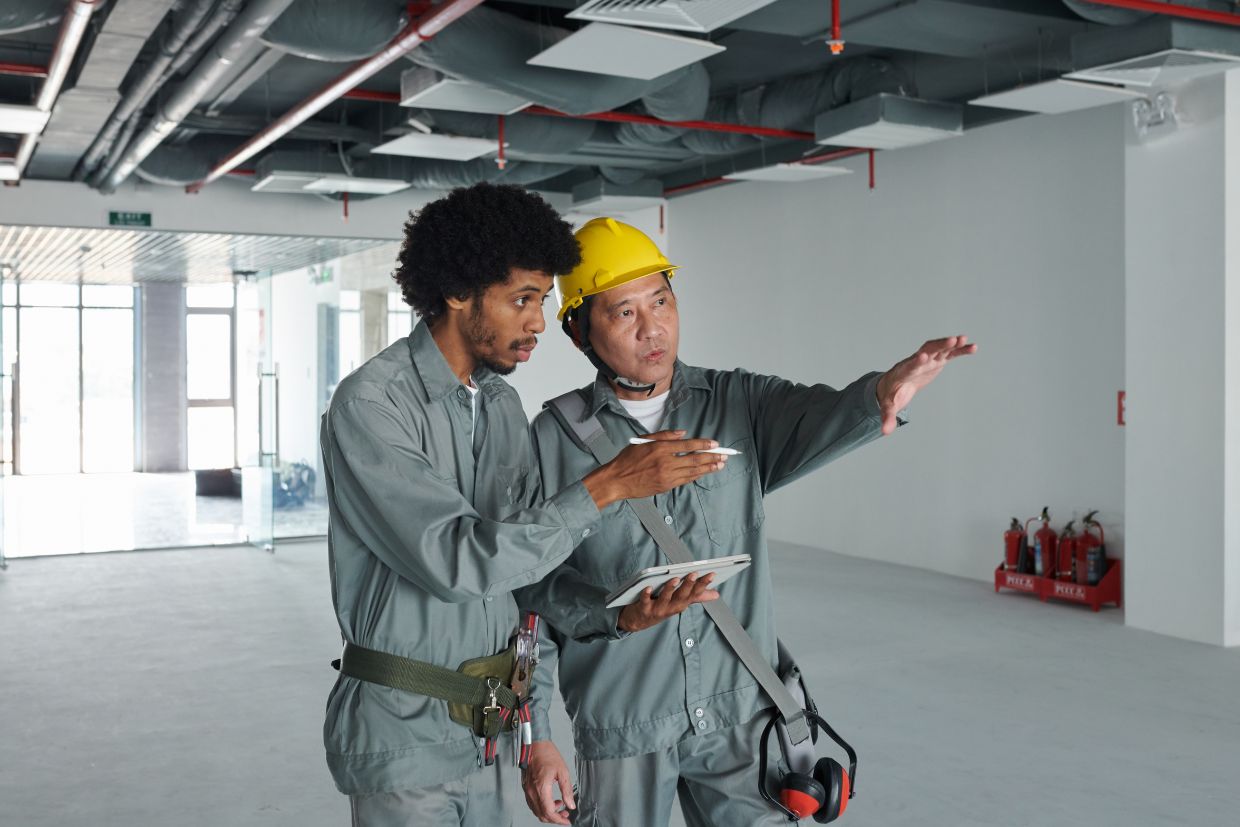
Not all renovation contractors can handle reinstatement. You need a team that understands building codes and has a track record with commercial managements.
What to Look For:
- BCA-Licensed Company: Ensure they are registered with the BCA. This ensures they know the safety regulations.
- Experience with Office Buildings: A contractor who mostly renovates HDB flats might not know how to handle the strict permit requirements of an office tower.
- Transparent Disposal: Ask them specifically which NEA-licensed facility they use. If they can’t name it, run.
- One-Stop Capability: The best reinstatement contractor Singapore has to offer will handle everything—masonry, electrical, plumbing, and painting—in-house. If they sub-contract everything out, delays are more likely.
Comparison Table: Who should you hire?
| Feature | Freelance Contractor | General Reno Firm | Specialist Reinstatement Firm |
| Cost | Low | Medium | Medium-Competitive |
| Speed | Slow/Unreliable | Average | Fast |
| Permit Knowledge | Low | Medium | High |
| M&E Expertise | Very Low | Variable | High |
| Best For | Small minor repairs | New fit-outs | Lease expiry handovers |
Common Mistakes Tenants Make During Office Reinstatement
In my 15 years in this trade, I’ve seen tenants lose thousands of dollars due to simple mistakes. Here is how to avoid them.
Starting Too Late
Reinstatement isn’t a weekend job. If your lease ends on the 31st, you can’t start on the 29th. If you handover late, the landlord can charge you double rent for every day you delay.
Not Checking Original Condition Photos
Did you take photos when you moved in? I’ve seen landlords ask tenants to fix scratches on the door that were there before the tenant moved in. Always compare the “make good” scope against your move-in report.
Hiring Non-Licensed Contractors
Building management can stop your work immediately if your workers don’t have the right safety passes or licenses. This halts the project and causes you to miss your deadline.
Skipping M&E Reinstatement
Some tenants think, “The aircon works, why fix it?” If the aircon vents aren’t in the original position shown on the building plans, the landlord will reject the handover. This is the most expensive mistake to fix last minute.
Office Reinstatement Timeline – How Long Does It Really Take?
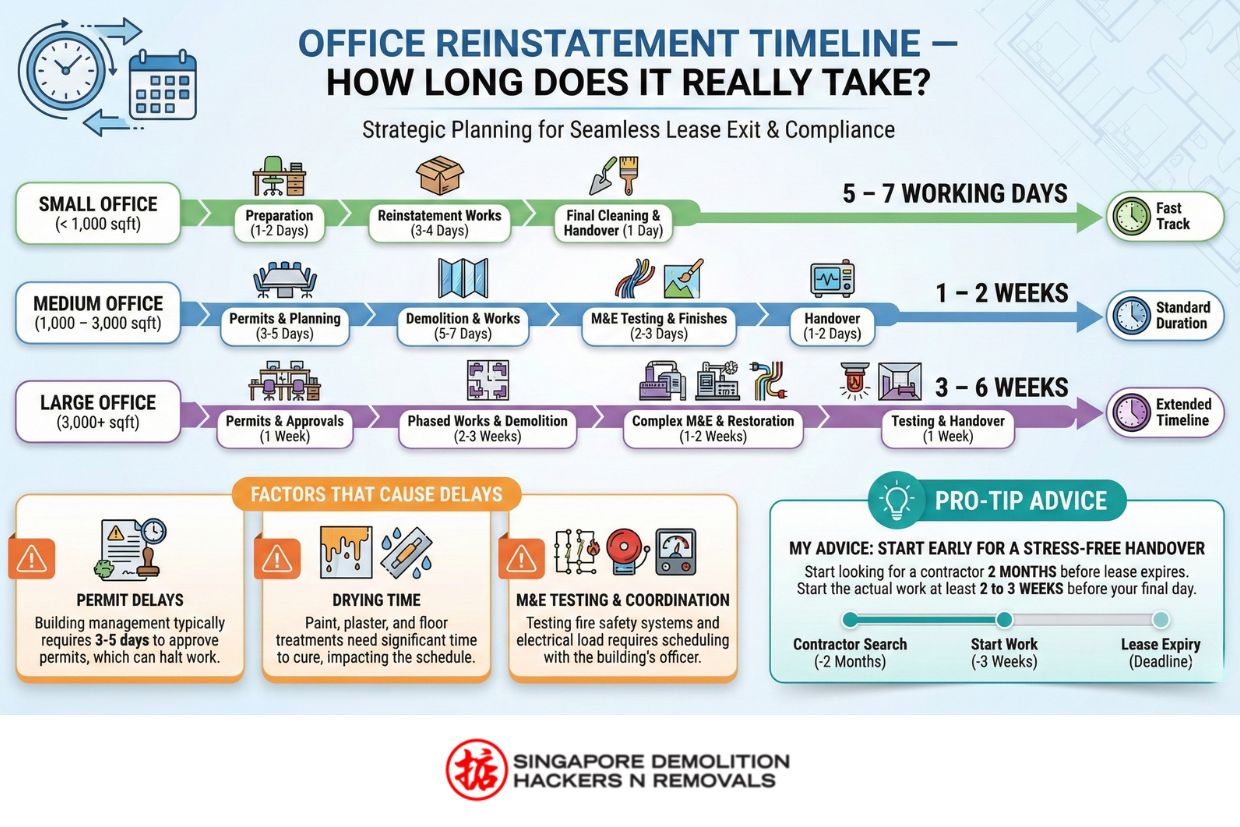
Planning your timeline is crucial. You need to officially vacate the premises and finish the work before your lease expiry date.
- Small Office (Under 1,000 sqft): 5 – 7 Working Days.
- Medium Office (1,000 – 3,000 sqft): 1 – 2 Weeks.
- Large Office (3,000+ sqft): 3 – 6 Weeks.
Factors that cause delays:
- Permit Delays: Building management usually takes 3-5 days to approve permits.
- Drying Time: Paint and plaster need time to dry.
- M&E Testing: Testing the fire alarm or electrical load takes time and coordination with the building’s fire safety officer.
My Advice: Start looking for a contractor 2 months before your lease expires. Start the actual work at least 2 to 3 weeks before your final day.
Conclusion
Office reinstatement might seem like a hassle, but it is a necessary part of the commercial leasing ecosystem in Singapore. It ensures that buildings remain safe and spaces remain leasable. The key to a stress-free handover is simple: Start early, budget for 2025 rates, and hire professionals. Don’t wait until the last week to find a contractor. By understanding the scope of work—from demolition to office reinstatement services and budgeting for it in advance, you can exit your lease gracefully and protect your security deposit. If you are approaching the end of your lease, take a walk around your office today. Look at the partitions, the flooring, and the lighting. That is your to-do list.
Ready to plan your move? Don’t leave your deposit to chance. Review your lease, check your dates, and get a professional assessment today.
FAQs About Office Reinstatement
FAQ 1: What is included in standard office reinstatement?
Standard reinstatement includes removing all temporary fixtures (partitions, built-in cabinets, flooring), removing electrical and data cabling, relocating aircon and fire safety systems to their original positions, repairing wall/ceiling damage, painting the walls white, and deep cleaning the unit.
FAQ 2: Is office reinstatement mandatory in Singapore?
Yes, for the vast majority of commercial leases. Unless your landlord has agreed to take over your renovations (which is rare), you are legally obligated to return the unit to its original bare condition.
FAQ 3: How early should I start reinstatement planning?
You should start getting quotations 2 months before your lease expires. Actual physical work should ideally begin 2 to 3 weeks before your lease end date to allow time for inspections and rectifications.
FAQ 4: How do I know whether my landlord will accept the reinstatement work?
The landlord or building manager will conduct a final joint inspection. To ensure acceptance, your contractor should follow the building’s “handover guide” and ensure all defects listed are rectified. Hiring a contractor familiar with your specific building helps significantly.
FAQ 5: What affects the cost of office reinstatement the most?
The complexity of Mechanical & Electrical (M&E) works has the biggest impact. Moving sprinklers, smoke detectors, and aircon ducting is expensive due to the skilled labor and safety regulations involved. High ceilings and strict night-work-only policies also increase costs.
FAQ 6: Can I negotiate reinstatement obligations before signing a lease?
Yes! Before you sign a new lease, you can try to negotiate a “fair wear and tear” clause that is more lenient, or ask for a “fitted handover” if the landlord agrees. However, once the lease is signed, the terms are usually non-negotiable.
Quick Summary: Office Reinstatement Explained
| Section | Summary |
|---|---|
| What Is Office Reinstatement | Returning the office to its original bare condition before renovations; required in most leases. |
| Included Works | Removal of partitions, built-ins, flooring, cabling, added lights; M&E reinstatement; patching; painting; deep cleaning. |
| Why Required | Lease obligations, landlord needs neutral space, safety compliance with BCA/SCDF. |
| Process | Inspection → Permits → Demolition → M&E → Patching → Painting → Cleaning → Final handover. |
| Cost (2025) | Small: $3.5k–$8k • Medium: $9k–$28k • Large: $28k–$85k+ • Avg: $15–$20/sqft. |
| Cost Factors | M&E complexity, ceiling height, glass partitions, disposal volume, night-work rules. |
| Choosing Contractor | BCA-licensed, commercial experience, proper disposal, one-stop in-house team. |
| Common Mistakes | Starting late, no condition photos, unlicensed workers, ignoring M&E, missing deadlines. |
| Timeline | Small: 5–7 days • Medium: 1–2 weeks • Large: 3–6 weeks. |